
September 13, 2026
A Smarter Way to Choose Yearbook Photos with AI
Albumie helps schools, teachers, and families choose photos for preschool and school yearbooks. Facial recognition makes it easy to see every photo in which each student appears and select the ones to include.
We have now expanded our automatic selection feature. Instead of looking only at faces, it considers the photo as a whole—including composition, expressions, exposure, and color—when choosing photos for an album.
Here is what has changed, along with two examples of how the AI evaluates a photo.
Where the previous approach fell short
Albumie already offered automatic photo selection. The original system evaluated factors such as the size and sharpness of each face, which way the person was looking, and whether their eyes were open.
Those signals are useful, but they do not always capture what makes a photo worth including in a yearbook.
Consider a photo of preschoolers sitting around a table and drawing. Because they are looking down at their work, their faces may be angled away from the camera and their eyes may be difficult to see. The previous system could give a photo like this a lower score, even though it captures a meaningful moment.
A good yearbook photo is more than a collection of clearly visible faces. Our customers wanted automatic selection to take the entire scene into account.
Looking beyond individual faces
Recent advances in visual AI make it possible to analyze the broader content of a photo, not just the condition of the faces in it.
Albumie can now consider composition, expressions, exposure, color, and other qualities that matter when deciding whether a photo belongs in a yearbook.
What the AI sees
Take the following classroom photo as an example.
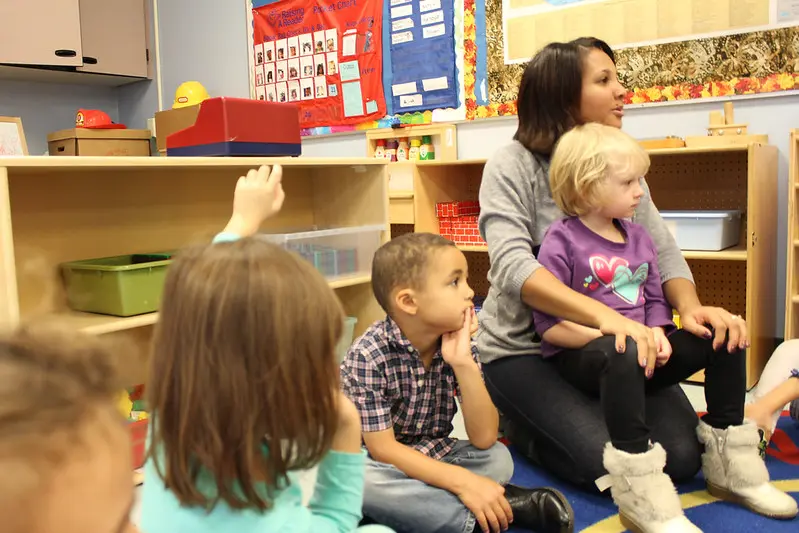
Photo: CDSA preschool photos (Seattle City Council / Public Domain)
Here is an example of the AI evaluation used during selection:
The back of a child's head takes up a large part of the foreground, which creates some difficulty with the sense of distance to the main subjects—the children and teacher—and with guiding the viewer's eye.
The boy in the center is also looking to the side, and the expressions of the children in the back are not captured clearly.
Overall, the composition is somewhat cluttered, making this more of a documentary snapshot. The exposure and color are standard for an indoor photo, with no significant issues.
The image captures a natural moment between the teacher and preschoolers in the classroom and conveys the atmosphere of the space well.
The photo does a good job of capturing an everyday moment between the teacher and children. At the same time, as the AI notes, the child's head occupies a large part of the frame. If I were making the final choice, I might leave this one out of the yearbook.
The evaluation goes beyond composition to consider the children's expressions, exposure, and color. That wider view surfaces strengths and problems that face analysis alone would miss, and those observations feed directly into the selection.
Now consider the kind of drawing photo that the previous approach could easily overlook.
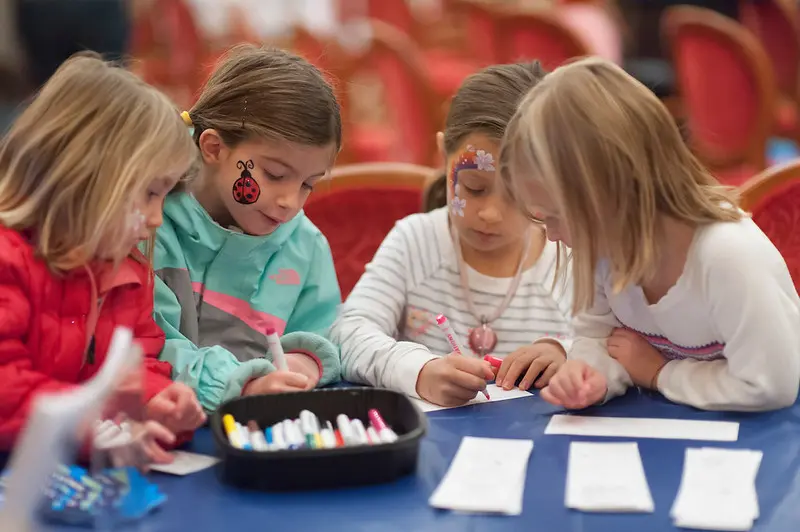
Photo: 2017 Traverse City Children's Book Festival (Jim Barnes / Public Domain)
The AI evaluated the photo as follows:
The photo captures a natural scene of four children gathered around a table, happily drawing and making crafts together.
The side-by-side arrangement gives the composition a sense of cohesion, while the faces and background blur are handled appropriately.
The face paint also makes the moment feel special, giving the photo the quality of a fun moment from preschool life that is well suited to an album.
Some of the children are looking down, and others are not facing the camera. A system based only on face direction and whether the eyes are open would have been less likely to select this photo.
By considering the image as a whole, the AI can recognize the cohesive composition, the background blur, and the special touch added by the face paint. Those details make it possible to rate the photo highly as a fun moment in the children's day.
Two ways to select photos in Albumie
Albumie uses these evaluations when automatically selecting photos for an album. You can choose between two modes depending on what matters most for your yearbook.
Prioritize best photos
Chooses each person's highest-rated photos while avoiding shots that look too similar to that person's earlier selections.
Prioritize varied scenes
Chooses photos that add new scenes to the album while avoiding shots that look too similar to anything already selected, including photos chosen for other people.
If you can include several photos of each person, Prioritize best photos is a good place to start. If space is limited or you want the album to cover a wider range of moments, choose Prioritize varied scenes.
A first pass, not the final decision
The photos selected by AI are candidates, not final decisions. You can review the results, replace anything that does not feel right, and make the final call on the moments you want the yearbook to preserve.
Try Albumie and experience a new way to approach yearbook photo selection. We will continue improving how Albumie evaluates and selects photos with the help of AI.